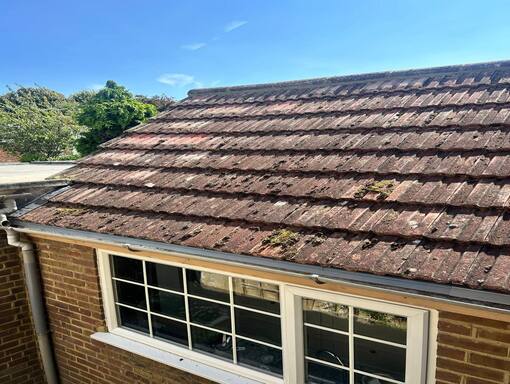
Discovering that your roof needs attention naturally raises an important question: should the affected area be repaired, or has the time come to consider replacing the roof?
There is no single answer that applies to every property. A relatively small, isolated defect may be perfectly suited to professional roof repair, while widespread deterioration across an ageing roof can make continued patching less practical. The condition of the roof as a whole is therefore more important than simply looking at the most obvious problem.
For homeowners in Cringleford, Norfolk, a professional roof assessment can help establish the extent of the deterioration and determine which approach is appropriate. At Cringleford Roofing Services, the objective should always be to identify what the roof genuinely requires rather than assuming that either repair or replacement is automatically necessary.
What Is the Difference Between Roof Repair and Roof Replacement?
Roof repair focuses on correcting specific defects while retaining the majority of the existing roof.
Depending on the problem, this could involve addressing damaged or displaced roof coverings, defective flashing, localised leaks or deterioration affecting a particular section.
Roof replacement takes a broader approach. The existing roof covering is renewed, allowing the complete roofing system to be assessed and appropriate components replaced as part of the work.
The right choice depends largely on whether the problem is isolated or represents part of more widespread deterioration.
When Does Roof Repair Make Sense?
Repair is often appropriate when the majority of the roof remains in serviceable condition and the defect can be clearly identified.
Examples can include:
- A small number of damaged tiles
- Localised water ingress
- Slipped or displaced roof coverings
- A specific flashing defect
- Damage confined to one section
- An isolated problem around a roof detail
- Minor deterioration that has been identified early
In these situations, targeted repair can restore the affected area without unnecessarily disturbing roofing materials that remain in good condition.
The Condition of the Rest of the Roof Matters
An individual defect should never be considered completely separately from the surrounding roof.
For example, replacing several damaged tiles may be entirely appropriate when neighbouring tiles remain secure and serviceable. If deterioration is visible across large areas, however, the same repair may only address a small part of a much broader problem.
A professional inspection therefore considers both the immediate defect and the general condition of the roof.
This helps determine whether the affected area is genuinely isolated.
When Does Roof Replacement Become Worth Considering?
Replacement can become a more appropriate option when deterioration is extensive rather than localised.
Warning signs may include:
- Frequent defects developing in different areas
- Widespread deterioration of the roof covering
- Recurring leaks
- Numerous previous repairs
- Large sections showing significant wear
- Increasingly fragile roofing materials
- Several roof components deteriorating together
None of these signs should automatically be treated as proof that replacement is necessary. They do, however, provide good reasons for assessing the roof as a complete system rather than concentrating on another isolated repair.
Recurring Repairs Can Reveal a Wider Problem
One repair does not necessarily indicate that a roof is approaching the end of its useful service.
The situation changes when problems continually appear in different places.
Perhaps one leak is repaired, followed by another elsewhere. Several tiles may need attention, then another section begins deteriorating shortly afterwards.
This pattern can suggest that the roof is experiencing broader age-related deterioration.
At this point, continuing to repair individual symptoms may become less practical than addressing the condition of the roof more comprehensively.
Why the Age of the Roof Is Only Part of the Decision
Homeowners sometimes assume that an older roof automatically requires replacement.
That is not necessarily the case.
Different roofing materials perform differently, and two roofs of a similar age can be in very different condition depending on their construction, maintenance history and exposure.
The actual condition is therefore more informative than age alone.
An older roof that remains fundamentally sound may still be suitable for targeted repairs. Conversely, a roof experiencing extensive deterioration deserves closer investigation regardless of assumptions about how long it should have lasted.
Roof Leaks Do Not Automatically Mean Replacement
Finding water inside the property can understandably make the problem feel serious.
However, a roof leak can originate from a relatively localised defect.
Water might be entering through a damaged roof covering, flashing detail, junction or another vulnerable point. Once inside, it can travel before becoming visible on a ceiling or wall.
The first task is therefore to identify where the water is actually entering.
If the underlying roof remains sound and the defect is isolated, professional repair may be sufficient.
Multiple Leaks Can Tell a Different Story
While one leak can result from a single defect, repeated water ingress from several areas can indicate broader deterioration.
This is particularly relevant when leaks continue appearing despite previous repairs.
A thorough assessment can establish whether the individual leaks are unrelated or whether they are symptoms of a roof that is deteriorating more generally.
Understanding that distinction is essential before deciding between further repairs and replacement.
Previous Repairs Should Be Considered
A roof’s repair history can provide useful information about its condition.
Several successful repairs over many years are not necessarily concerning. Roofs naturally require occasional maintenance.
More attention may be needed when repairs become increasingly frequent or when the same areas repeatedly fail.
Important questions include:
- Are defects occurring in one location or across the roof?
- Are previous repairs remaining sound?
- Are new problems developing soon after others are resolved?
- Is the surrounding roof covering still in good condition?
- Is deterioration becoming progressively more widespread?
The answers help build a clearer picture of whether continued repair remains sensible.
Look Beyond the Most Obvious Damage
The visible defect is not always the complete problem.
A missing tile is easy to spot, but deterioration elsewhere may be less obvious from ground level.
Professional roof assessment can consider areas such as:
- Roof coverings
- Ridges
- Verges
- Flashing
- Valleys and junctions where applicable
- Chimney details where present
- Flat roofing sections
- Visible supporting components
- Signs of water ingress
- Previous repairs
Looking at these elements together helps establish the overall condition rather than basing the decision on one visible fault.
What If Only One Section Is Damaged?
Localised deterioration does not necessarily justify replacing an otherwise serviceable roof.
Where one section has been affected but surrounding areas remain in satisfactory condition, focused remedial work may provide the appropriate solution.
The cause of the damage still needs to be understood.
If the affected section has deteriorated because of an underlying problem, simply replacing the visible material may not be sufficient.
Professional assessment helps determine the extent of the affected area and whether the surrounding construction can remain undisturbed.
When Widespread Deterioration Changes the Decision
Replacement becomes more relevant when defects are no longer confined to individual sections.
A roof showing deterioration across multiple elevations or numerous components may require increasingly frequent attention if work continues to be approached one defect at a time.
At this stage, the question is not simply whether another repair can physically be completed.
It is whether another repair addresses the overall condition of the roof.
That distinction is important when making a sensible long-term decision.
Can Early Attention Make Repair More Likely?
In some circumstances, yes.
A minor defect that is identified while surrounding roofing materials remain sound may be suitable for relatively focused work.
If water ingress or deterioration is allowed to continue, additional materials can become affected and the scope of the problem may increase.
Homeowners should therefore avoid waiting for a minor issue to become severe before arranging an assessment.
Early investigation does not mean extensive work will automatically be required. In fact, it can provide a clearer opportunity to identify a localised defect before it develops further.
What Are the Signs Your Roof Should Be Assessed?
It is sensible to arrange an inspection if you notice changes such as:
- Water staining indoors
- Missing or displaced tiles
- Visible cracking or deterioration
- Loose roofing materials
- Recurring dampness after rainfall
- Problems repeatedly appearing in different areas
- Previously repaired sections deteriorating again
- Noticeable changes in the appearance of the roof
Some defects are difficult to assess accurately from ground level, so professional inspection can provide a much clearer understanding of what is happening.
Why Professional Assessment Is Important
Choosing between repair and replacement should be based on evidence rather than guesswork.
A professional roofer can assess the immediate defect while considering the condition of the wider roof.
The assessment can help establish:
The Extent of the Problem
Is deterioration confined to one area or present throughout the roof?
The Condition of Surrounding Materials
Are nearby roofing components still performing effectively?
The Cause of the Defect
Has the problem resulted from isolated damage or broader deterioration?
Whether Previous Repairs Are Performing
Recurring defects can reveal information about the roof’s wider condition.
The Most Appropriate Scope of Work
Once the roof has been properly assessed, it becomes much easier to determine whether targeted repair or more comprehensive renewal is justified.
A New Roof Should Not Be Recommended Simply Because Repairs Are Possible
Equally, continued repairs should not be recommended simply because another patch can technically be completed.
The objective should be to choose the approach that suits the actual condition of the roof.
If most of the existing roof remains serviceable, preserving it and repairing the affected area can be entirely appropriate.
If deterioration is extensive and defects are continually emerging, replacement may provide a more coherent solution by addressing the roofing system as a whole.
Good roofing advice recognises the difference.
Roof Repairs and Replacement in Cringleford, Norfolk
At Cringleford Roofing Services, we provide professional roofing services throughout Cringleford, Norfolk, including roof repairs and roof replacement.
Our approach begins with assessing the condition of the existing roof and identifying the nature and extent of any deterioration.
Where a focused repair is appropriate, there is no reason to disturb sound areas unnecessarily. Where the roof is showing widespread deterioration and repeated defects, a more comprehensive approach may be worth considering.
The aim is to recommend work based on what the roof genuinely needs and provide a dependable solution appropriate to the condition of the property.
Conclusion
Deciding between roof repair and replacement depends primarily on the extent and nature of the deterioration.
An isolated leak, several damaged tiles or a specific defective detail may be suitable for targeted repair when the surrounding roof remains in good condition. Replacement becomes more relevant when deterioration is widespread, roofing materials are becoming increasingly unreliable or repairs are needed repeatedly across different sections.
The most important step is obtaining a proper assessment before making the decision. Looking at the roof as a complete system helps distinguish a repairable local defect from a broader problem that requires a more comprehensive solution.
If your roof in Cringleford, Norfolk needs attention and you are unsure whether repair or replacement is the better approach, contact Cringleford Roofing Services. We can assess its current condition and recommend an appropriate roofing solution based on the extent of the work genuinely required.
Call us on: 01603 249 398
Click here to find out more about Cringleford Roofing Services
Click here to complete our contact form and see how we can help with your roofing needs.