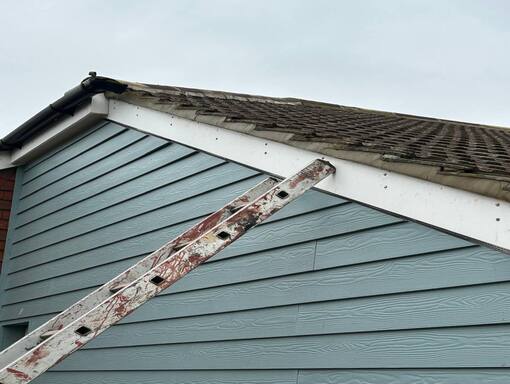
Persistent damp can be frustrating, particularly when individual roof repairs appear to work briefly before moisture returns. In some cases, installing a new roof provides the comprehensive solution needed to stop repeated water ingress. However, replacement is only appropriate when the roofing system has deteriorated beyond the point at which localised repairs remain dependable.
Damp does not always originate from the roof, and water entering through one defect can travel before becoming visible indoors. For property owners in Cringleford, Norfolk, an accurate inspection is therefore essential before deciding whether further repair work or a complete roof replacement is the right course of action.
When Roof Replacement Can Resolve Persistent Moisture Problems
A new roof can solve recurring water ingress when widespread deterioration affects several interconnected components. It replaces the failing covering and creates an opportunity to renew the supporting roofing system rather than repeatedly treating separate symptoms.
Confirming That the Roof Is the Source
Water staining on a ceiling does not automatically prove that the roof covering has failed. Condensation, defective plumbing, blocked drainage and moisture entering around external junctions can produce similar internal signs.
A professional assessment should consider when the damp appears, how it changes during rainfall and which parts of the property are affected. Confirming the source prevents unnecessary roof work and ensures that the actual route of moisture is addressed.
Why Roof Leaks Can Be Difficult to Trace
The place where water appears inside a property may be some distance from its original entry point. Moisture can travel along underlay, rafters, battens and other surfaces before reaching the ceiling below.
This movement can make a leak appear to return even after work has been completed. The original repair may have addressed one defect while another route remains elsewhere on the roof. A whole-roof inspection is particularly important when damp affects different rooms or changes position over time.
Signs That Localised Repairs May Still Be Suitable
A complete replacement is not always necessary. Focused repair work may remain effective when:
- Damage is confined to a clearly defined area
- Most tiles or slates remain secure and serviceable
- The underlay and battens are generally sound
- Flashing has failed at one identifiable junction
- The leak has a confirmed and accessible source
- Previous repairs have otherwise remained dependable
- The roofline shows no signs of widespread movement
When the surrounding system remains in good condition, correcting the specific fault can restore effective weather protection without disturbing sound areas.
When Repeated Repairs Suggest a Wider Problem
Replacement becomes more relevant when leaks continue to develop in unrelated sections or when repaired areas fail because the surrounding materials are also deteriorating.
Warning signs can include:
- Water ingress affecting several parts of the property
- Numerous loose, cracked or missing tiles
- Brittle or torn underlay across wider sections
- Deteriorated battens or recurring fixing failures
- Persistent defects around several valleys and junctions
- Noticeable sagging or uneven roof lines
- Previous patches no longer providing lasting protection
These patterns may show that the roof is failing as a system rather than suffering from one isolated defect.
How Age Influences the Decision
Age alone does not determine whether a roof needs replacing. A well-constructed older roof may continue performing reliably, while a newer installation can develop problems if its materials or workmanship are unsuitable.
The condition of the covering, fixings, underlay, battens, flashing and supporting structure matters more than the installation date. Replacement should be based on evidence of widespread deterioration and reduced performance rather than age in isolation.
What a New Roof Can Address
Where extensive failure has been confirmed, replacement allows the roof to be rebuilt as a coordinated system. The existing covering can be removed so that concealed areas are exposed and assessed.
Depending on the roof’s condition, the work may address:
- Defective tiles or slates across several roof slopes
- Failed underlay beneath the covering
- Damaged or weakened battens
- Poorly performing roof junctions
- Deteriorated flashing and weathering details
- Inadequate ventilation within the roof space
- Problems with water flow towards gutters and outlets
Treating these components together can provide a more dependable outcome than continuing to patch individual faults.
Why Internal Damp May Not Disappear Immediately
Stopping water ingress prevents additional moisture from entering, but materials already affected may require time to dry. Roof timbers, insulation, plasterboard and internal finishes can retain moisture after the external defect has been corrected.
The affected areas should be assessed so that saturated or deteriorated materials are not overlooked. A successful roofing solution deals with the entry point while recognising that the consequences of an established leak may extend beneath the visible covering.
The Importance of Roof Ventilation
Not all moisture within a roof space enters from outside. Warm, moisture-laden air from inside the property can condense on cold roofing surfaces when ventilation is inadequate.
A new roof may improve ventilation when the existing arrangement is unsuitable, but condensation should be distinguished from rainwater ingress during the diagnosis. Without this distinction, replacing the covering alone may not fully resolve the damp conditions.
Why a Professional Assessment Matters
The decision between repair and replacement should follow a detailed evaluation of the complete roof. Cringleford Roofing Services can inspect persistent damp and water ingress in Cringleford, Norfolk, identify the likely source and assess whether the roof has an isolated defect or more extensive deterioration.
This provides a clear basis for recommending focused repairs where they remain viable or a new roof where replacement offers the more reliable long-term solution.
Conclusion
A new roof can solve persistent damp and water ingress when widespread failure affects the covering and supporting components. It is not automatically necessary when the moisture originates from one repairable defect or a source unrelated to the roof.
Accurate diagnosis is therefore the essential first step. If damp patches or roof leaks continue to return at your property in Cringleford, Norfolk, contact Cringleford Roofing Services to arrange a professional assessment and determine the most appropriate solution.
Call us on: 01603 249 398
Click here to find out more about Cringleford Roofing Services
Click here to complete our contact form and see how we can help with your roofing needs.